

St Bega's Way and Way Back
North of England


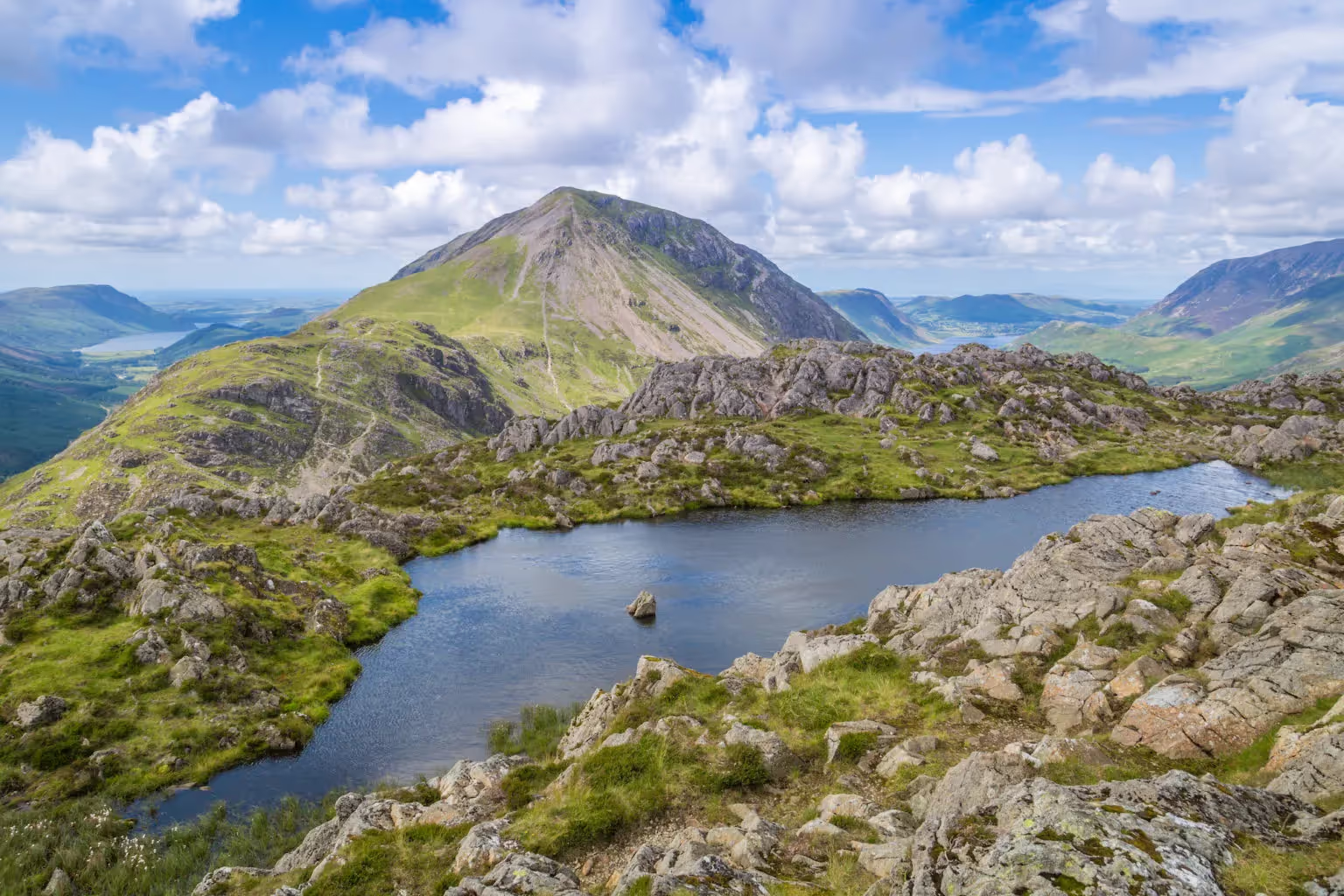


St Bega’s Way: St Bees Priory to St Bega’s, Bassenthwaite – 40 miles, 4 days
Saint Bega was an Irish princess, who once lived a hermit’s life on the windswept coast of Cumbria, before fleeing inland for fear of pirates, but left behind a magical bracelet. Monks at the C12th Norman St Bees Priory once prayed to St Bega when they feared a miscarriage of justice would leave them bereft of their land. When the time came to perambulate around their estate, a heavy fall of snow covered the entire country except for their priory, revealing the land that was theirs.
This route connects the two churches in the Lake District dedicated to St Bega. From St Bees you travel inland through the beautiful West Cumbrian scenery and the breathtaking Lake District before reaching the simple C12th chapel of Bassenthwaite that has inspired countless literary figures, including Wordsworth and Tennyson. Along the way you will see the Cumbrian coastal plain; lakeland fells such as the Scafells, Ennerdales, Great Gable, Skiddaw and others; the rewilded lands of Ennerdale Water; lakes such as Derwent Water and Bassenthwaite Lake; the shire-like Borrowdale and, of course, the beloved herdwick sheep.
St Bega’s Way Back: St Bega’s, Bassenthwaite to St Bees Priory – 50 miles, 5 days
This route swaps the start and end points but goes a different way, along which you will see some of the same landscapes as on the first route but from a different perspective, and new sights too. There are the lakes Crummock Water, Buttermere and Wastwater; fells Yewbarrow, Buckbarrow and Sale; the church and famous yew tree in Lorton Vale; Buttermere Church; the ancient farming landscape surrounding Wasedale Head Church; Gosforth’s tall Viking-age cross and nearby holy well and then, finally, St Bees Priory. Note the section up Grey Stones and down Kirk Fell is reported as very challenging and can be overgrown in places. You may wish to consider the longer but less hazardous trails round the side.
See also the new Kentigern Way, a 90-mile route connecting nine Cumbrian churches associated with St Kentigern.
Highlights
- Short but perfectly-formed routes
- Dramatic joy-inducing landscapes
- Luscious greenscape
- Informative and practical guidebook
Holy Places along route listed in our book Britain’s Pilgrim Places: St Bees; Keswick.
Low-cost hostels along the route – YHA Ennerdale, Ennerdale, Ennerdale 2, YHA Black Sail, Warnscale Bothy, Dubs Hut, Seathwaite, YHA Honister Hause, Borrowdale, Bowder Stone Bothy, Newlands, YHA Hawse End, Keswick, Bassenthwaite, Buttermere, YHA Buttermere, Wasdale Head, YHA Wasdale Head and across region.
The guidebook for this route gives historical context to the route and much interesting information about what you are walking past, practical details such as accommodation, gives written instructions for navigation, and at key viewpoints it describes what you are looking at. Postal cheques only for payment.
Buy Guidebooks for St Bega’s Way and St Bega’s Way Back
Article below first appeared in Idler Magazine
St Bega’s Way is a 36-mile pilgrimage that crosses the Lake District on an inland diagonal, from the red sandstone cliffs of St Bees to a small church dedicated to a 7th-century Irish saint on the shore of Bassenthwaite. It is a route shaped by sheep, saints and, of course, the land.
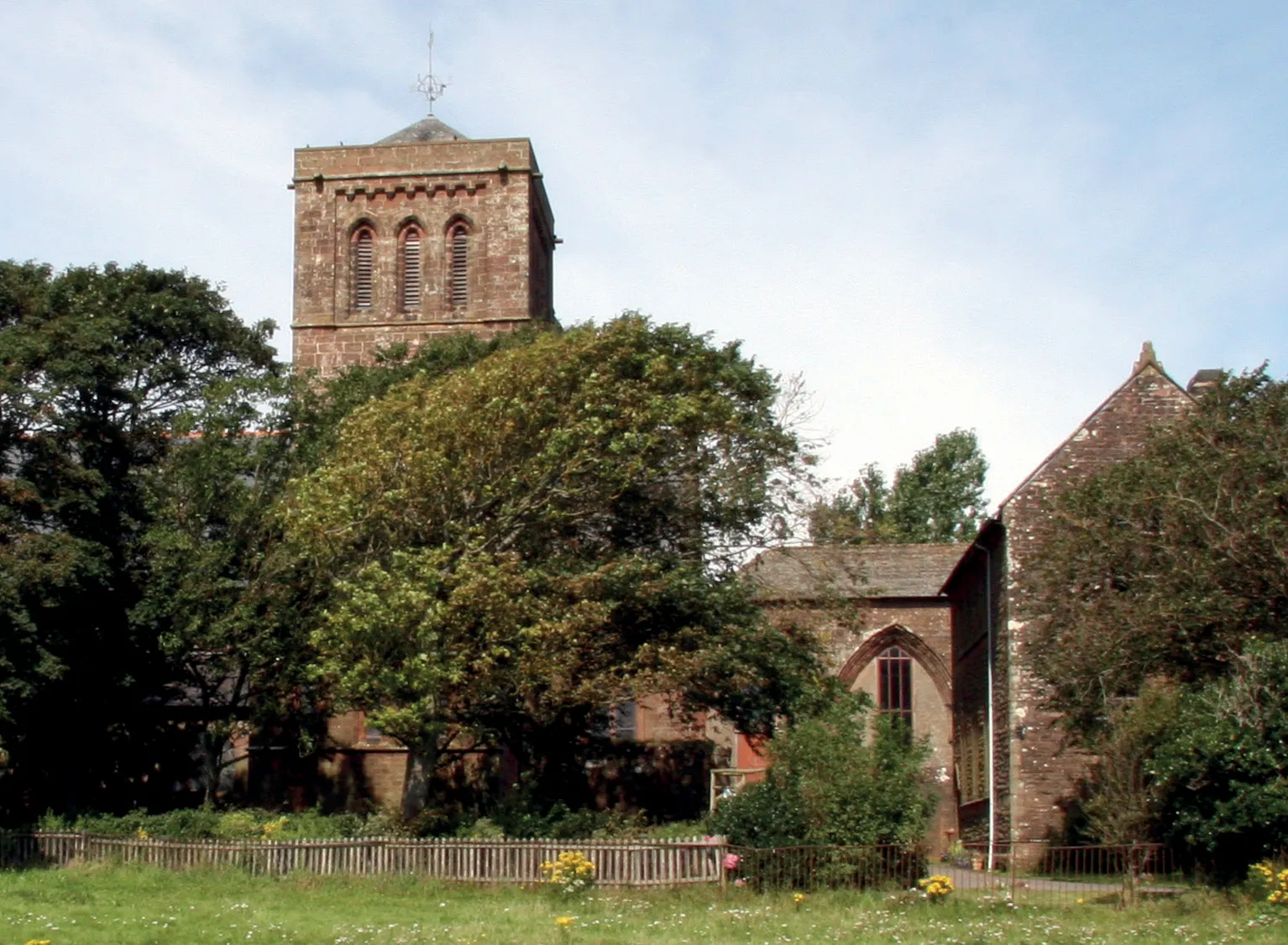
The path begins at St Bees Priory, whose thick red sandstone walls have watched over this coastline for nearly a thousand years. The priory is linked to the legend of St Bega, an Irish princess said to have fled across the sea to avoid an arranged marriage to a Viking chieftain. Many tales abound, including one of snow falling over a vast area apart from one patch, where the monastery was, but the core remains: she sought sanctuary, chastity and freedom, and the Cumbrian coast gave it to her. The medieval monastery claimed to possess her miraculous bracelet, and her cult endured here long after the dissolution. Her shrine today still has a strong feel of holiness.
The saint’s story of fierce youthful independence sets the tone for the walk ahead. This is not merely the manicured Lake District of postcards but an older, more pastoral England: working farms, sheepfolds, upland ridges and long stretches where you hear only wind, water and the bleat of Herdwick sheep on the fell.
The Lake District’s identity is bound up with its wool industry, which shaped the region for centuries. The iconic Herdwick sheep – tough, stocky, friendly-looking, very woolly and slow to move for anyone but themselves – are said by some to have been introduced by St Bega’s own community. There’s no firm evidence, but the association persists, and the saint is often shown with a sheep at her feet. After all, wool is basically a miracle material: water-resistant, warm even when wet and very breathable, quiet and natural.
Walking St Bega’s Way slowly, you will notice the textile details of our flocking friends: wool snagged on wire, lanolin scent on the breeze, fleeces drying on pens, the soft sound of hooves on turf, (and, of course, the bleating and bah-ing). The landscape itself feels woven rather than built – threads of river, ridge, field and path, crossing and re-crossing.
Wool wealth once funded Cumbrian churches, barns, and entire villages. Many of the quintessential dry-stone walls that form the landscape patchwork were built to enclose grazing rights, also with sheepfolds and other ancient enclosures. The traditional waist-high ladder stiles that appear at regular intervals exist solely because sheep will neither jump high nor tolerate being herded the long way round.
Why not sing a few traditional Lakeland songs that celebrate sheep and wool to various farmers and flocks along the way – Tarry Wool, Rosebuds in June, Canny aul’ Cumberland? They are essentially work songs: steady rhythms, practical images, rooted in the farm year. They remind you that the Lake District has always been a place of labour first, and scenic recreation second.
From St Bees the route climbs inland through farmland, then over a series of ridges of Cleator Moor towards Ennerdale. Although the scenery changes constantly, the structure of the landscape is consistent: long glacial valleys running east–west, and the walker moving north-east, cutting across or through them at an angle. This creates a feeling of shifting perspective, as though you are turning pages through different versions of the same story. Make sure you drink from all the wild streams that you come across with a water filter bottle, e.g. a Lifestraw or Grayl.
Ennerdale Water is the first major landmark, a glacial lake framed by steep, wooded slopes and rewilded land. The path follows the shoreline before rising to the peaks of High Crag and High Stile before descending to arguably the most beautiful lake in the Lakes: Buttermere – a picturesque, shimmering calm stretch of water backed by ridges that turn gold in late afternoon. This is sheep-farming country at its most characteristic: stone barns, well-kept fields, and Herdwicks. The wool economy here is centuries old; monastic sheepmasters once controlled large parts of the valley, driving their flocks to market along drove tracks that are now public footpaths.
Then you sidle along towards Crummock Water visiting a waterfall if you feel up to it. On clear days this next section is forgiving, but in mist or damp it becomes serious – the vast boggy ground around Wythop Moss also has a reputation for biting horseflies in summer. They are intense, but keep moving and they usually lose interest, and try to keep your eye on the path, as it’s east to get lost.
The walk gathers a modest sense of arrival by circumambulating Bassenthwaite Lake – maybe also have a dip – before emerging at St Bega’s Church, a modest 12th-century building set back from the lake surrounded by mature trees. Some claim the church stands on the site of Bega’s original hermitage; others say her community lived closer to the coast, near St Bees. Either way, you are on her path.
The church keeps a small book of intentions. Pilgrims write hopes, thanks or simple acknowledgements for their time in this place of power. This practice links you with the many who have walked before, from medieval devotees to modern hikers who weren’t expecting to be moved by a quiet chapel on the edge of a lake. Indeed, it has also inspired poetry by many, including Wordsworth and Tennyson.
Bassenthwaite Lake itself lies broad and tranquil, often with a thin wind across its surface. Viewed from the church, the water seems to stretch into silence. It is easy to imagine a young woman from Ireland choosing this place as a sanctuary.
St Bega’s Way offers no grand finale, no cathedral, instead you reach a modest church and a mysteriously peaceful lake. The reward is cumulative: a clearer sense of the land’s working history, a deeper understanding of England’s wool culture, and a palpable companionship with a saint whose legend honours independence and faithfulness to one’s inner calling. An inner sturdiness and pure ferocity, accessed by simply walking in her footsteps.
Route highlights


Location

Nearby Places




Discover holy places, and bring your own beliefs.
Pilgrimage by foot is connected with places and landscape, and how those places make you feel. Read about holy places.
At the British Pilgrimage Trust, we believe a pilgrimage should be made on an individual’s own terms. We are founded on the principle that we can all bring our own beliefs to the journey, accessible and welcoming to all.


Comments
0 Comments
Login or register to join the conversation.
Tom Jones
Lorem ipsum dolor sit amet, consectetur adipiscing elit. Suspendisse varius enim in eros elementum tristique. Duis cursus, mi quis viverra ornare, eros dolor interdum nulla, ut commodo diam libero vitae erat. Aenean faucibus nibh et justo cursus id rutrum lorem imperdiet. Nunc ut sem vitae risus tristique posuere.